English| EUR
Suggested for you
More currencies
Choose a language
Bangkok's tuk tuks operate without metered fares, which means every ride requires negotiation. Understanding typical pricing structures helps you secure fair rates and avoid the inflated quotes often offered near tourist landmarks. This guide breaks down real-world costs across common routes and tour durations.
Quick answer
Tuk tuk tour bangkok price typically ranges from 100 THB for short point-to-point trips to 1,500 THB for multi-hour chartered tours covering major temples and districts. Standard one-hour circuits through Old Town or Chinatown cost 400-600 THB, while half-day custom itineraries run 800-1,200 THB. Prices vary by route length, number of stops, driver experience, and your negotiation skill—quoted rates near Khao San Road or the Grand Palace often start 50-100% higher than street rates in residential neighborhoods.
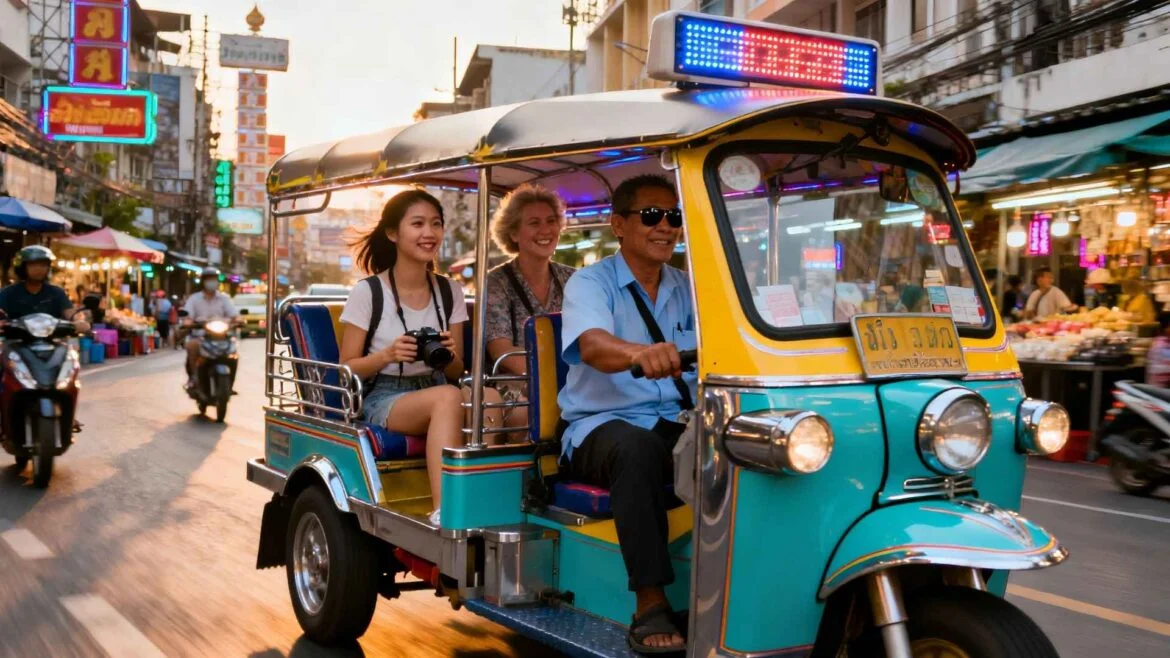
Bangkok's tuk tuks carry no fare meters, no published rate cards, and no standardized pricing—every journey begins with a verbal agreement between rider and driver. This informal system emerged from the vehicle's origins as an improvised passenger modification of the Daihatsu Midget in the 1960s, and it persists because tuk tuks exist in a regulatory gray zone between licensed taxis and private transport. The result is a pricing landscape shaped entirely by supply, demand, and haggling ability. Short hops between adjacent neighborhoods—Silom to Sathorn, Sukhumvit Soi 11 to Soi 23—settle at 80-150 THB when negotiated from the street. River crossings add 20-40 THB due to bridge tolls and longer distances. Multi-stop temple circuits typically cost 400-600 THB per hour, though drivers near Wat Pho and Wat Arun quote 800-1,000 THB as opening offers to foreign visitors. The gap narrows when you walk two blocks away from entrance gates and hail a driver mid-route rather than one parked at a tour zone. Chartered tours covering Rattanakosin Island, Chinatown's Yaowarat Road, and the flower market span two to three hours and cost 1,000-1,500 THB when arranged directly with drivers in residential sois like Ari or Thonglor. These rates assume continuous use of the vehicle with no extended waiting periods—drivers charge an additional 100-200 THB per hour if you plan temple visits exceeding 20 minutes each. Evening rides command a 20-30% premium due to higher fuel costs and reduced competition from buses and boats that stop running after 21:00. Payment happens in cash at ride's end, and drivers expect Thai baht—credit cards and mobile payment apps remain rare. The negotiation anchors your fare, but factors like sudden rain, festival traffic, or a driver's willingness to navigate narrow alleyways create real-time adjustments. Prices never include entrance fees to paid sites, and any driver offering "free" stops at jewelry shops or tailors is collecting commissions that inflate your quoted rate by 100-300 THB.
“Bangkok's tuk tuks carry no fare meters, no published rate cards, and no standardized pricing—every journey begins with a verbal agreement between rider and driver.”
There is no fixed government-mandated price for street tuk-tuks in Bangkok. Costs are determined by negotiation between the passenger and the driver prior to departure.
Verdict: The price a passenger pays depends on their negotiation skills or the pre-arranged fee set by a tour provider.
Tuk-tuk services in Bangkok operate continuously, providing flexible transportation options at any time of day or night. Availability remains consistent throughout the week to accommodate traveler schedules.
Many visitors focus only on the quoted fare and overlook hidden costs that emerge during the ride. Understanding common pricing pitfalls helps you avoid wasted time and unexpected expenses.
Accepting tours with unannounced shopping stops
Drivers offering very low rates often compensate by taking you to gem shops, tailor outlets, or souvenir stores where they earn commissions. Agree on a sightseeing-only route in advance and confirm no commercial stops are included.
Paying before confirming the full itinerary
Handing over cash upfront removes your leverage if the driver changes the plan or cuts the tour short. Settle payment only after completing the agreed route and duration.
Assuming all drivers quote per-person rates
Some quote per vehicle, others per passenger—mixing these up doubles your expected cost. Clarify whether the price covers the entire tuk tuk or each rider before starting.
Ignoring meter vs. fixed-price distinctions
Tuk tuks do not use meters; all fares are negotiated. Assuming a metered rate or agreeing without discussion leads to disputes at the end of the ride.
Booking through unofficial street touts
Touts around tourist areas often inflate prices or hand you off to unlicensed drivers. Use hotel concierges, verified platforms, or approach tuk tuks directly at recognized stands.
Navigating tuk tuk costs effectively requires clear communication and the use of modern digital tools to ensure price transparency.
Download apps like Grab to view standardized pricing for tuk tuk journeys in real time. This provides a baseline estimate before you negotiate with drivers on the street.
Always confirm the exact total price with the driver before stepping into the vehicle. Avoid vague terms like around or maybe to prevent confusion at your final destination.
Drivers often lack change for large bank notes, which can complicate payment upon arrival. Keep smaller bills and coins handy to settle the agreed fare exactly.
Tuk tuk drivers navigate better when provided with a major landmark or specific intersection rather than an obscure street address. A clear destination minimizes unnecessary driving time and keeps the fare predictable.
Bangkok traffic congestion significantly increases travel time, which can influence the final fare negotiation. Plan journeys during off-peak periods when drivers are more likely to accept a standard rate for shorter trips.
Everything you need to know about tuk tuk tour bangkok price
The final amount for your journey typically depends on the distance traveled, the duration of your trip, and your bargaining skills with the driver. Because these vehicles are a flexible mode of street transport, rates are not standardized across the city.
No, there is an entrance fee of 0 THB for this mode of transit because it is a street transportation service rather than a gated attraction. You are paying for the service of the driver and the vehicle rental rather than an admission cost.
Private sightseeing excursions often involve a pre-arranged agreement for a specific timeframe or itinerary, which can offer more predictability than hailing a ride on the street. While the tuk tuk tour bangkok price can vary, booking through reputable channels ensures clarity before your departure.
Most street drivers do not operate with a fixed meter, meaning the cost for visiting Bangkok landmarks is usually negotiated upfront. It is helpful to research general market rates to ensure you are comfortable with the quoted fee before starting your trip.
To avoid unexpected expenses, always confirm your destination and the total fare clearly with the driver before stepping into the vehicle. Verifying the route and the price beforehand is the most effective way to prevent misunderstandings during your journey.
The most effective strategy is to suggest a fair price based on typical market rates and agree on it before the ride begins. Being polite and firm helps ensure a positive experience while securing a reasonable tuk tuk tour bangkok price for your travels.
Nighttime rates can sometimes be slightly higher due to increased demand or special routes, but this remains subject to individual driver discretion. Since these vehicles are available 24 hours, you can access services at any time, though it is always wise to confirm the cost in advance.
Bangkok Tuk Tuk Tour Itinerary Tips
Read more Tickets & toursPrivate Tuk Tuk Tours in Bangkok
Read more GuideGetting Around: Bangkok Tuk Tuk Ride Guide
Read more Tickets & toursBangkok Tuk Tuk Temple Tours
Read more Tickets & toursBangkok Tuk Tuk Night Tours
Read more Tickets & toursBangkok Tuk Tuk Food Tours
Read more